

Table of Contents
- Why Authentic Sports Collectibles Are Worth the Search
- Quick Comparison: What to Look For in a Sports Memorabilia Store
- How to Verify Sports Memorabilia Before You Buy
- What a Sports Memorabilia Certificate of Authenticity Should Include
- Vintage Sports Jerseys: What Makes Them Different
- Buying Sports Collectibles Online: Risks and Safeguards
- Autographed Jerseys, Helmets, Balls, and Pucks: What to Expect
- Frequently Asked Questions
Last Updated: October 14, 2026
Why Authentic Sports Collectibles Are Worth the Search
Walk into any fan's home and you'll spot the difference: a replica hangs on a wall, while a genuine piece of history gets its own shelf.
That gap is why so many collectors now hunt for where to buy authentic sports collectibles instead of settling for big-box merchandise.
Authentic sports collectibles carry verified provenance: the signature, jersey, or game-used equipment traces back to the athlete or event it represents. A certificate of authenticity, a documented chain of ownership, and matching serial numbers separate a real collectible from an expensive lookalike.
The stakes are real: the market for autographed memorabilia has drawn sophisticated forgeries, and buyers who skip verification often discover the problem years later when they resell. Below, we'll show you how to spot a genuine item, what a trustworthy certificate should contain, and where to shop safely.
Quick Comparison: What to Look For in a Sports Memorabilia Store
A trustworthy sports memorabilia store documents where each item came from, prices transparently, and stands behind what it sells with a clear return policy. But "store" now means four things, specialty retailer, marketplace, auction house, and local card shop, and each shifts risk differently.
When you're comparing sellers, these are the criteria that actually matter:
| What to Check | Why It Matters | Red Flag |
|---|---|---|
| Provenance documentation | Confirms the item's history | Vague or missing paperwork |
| Certificate of authenticity | Backs the signature or game use | Generic, unnumbered certificate |
| Return policy | Protects your purchase | "All sales final" on signed items |
| Pricing transparency | Shows you're not overpaying | Prices wildly below market |
| Condition disclosure | Sets accurate expectations | No photos of flaws or wear |
| Buyer protection | Determines who refunds you if something goes wrong | No written dispute process |
Seller Types and Where the Risk Sits
- Specialty memorabilia retailers. They curate inventory, authenticate in-house or through a third party, and offer a written return window. You pay a premium, but the seller is the single point of accountability.
- Open marketplaces. Inventory is enormous and prices lower, but the platform is a venue, not a guarantor. Buyer protection depends on filing within a window and documenting the misrepresentation.
- Auction houses. Best for rare, high-end pieces. Buyers pay a premium on top of the hammer price, and returns are often limited to authenticity disputes.
- Local card and memorabilia shops. You can inspect in person and build a relationship, but inventory is limited and pricing varies by owner.
Pricing Mechanics by Category
Prices vary by item type and rarity. What drives cost at each tier:
- Single autographed baseballs: entry-level. Cost depends on the signer's stature and whether it's an official league ball or a souvenir.
- Autographed mini helmets: mid-tier and popular with football collectors. Box condition and signature placement affect value.
- Full-size autographed helmets: higher priced with more display impact; game-style shells cost more than replicas.
- Pre-worn jerseys: from affordable throwbacks to premium Cooperstown pieces. Era accuracy, manufacturer, and pre-worn versus game-worn status drive the spread.
- Game-used equipment and stadium artifacts: the top of the market, priced by rarity and provenance. Documentation matters more than the item.
At Jackson's Jerseys & Memorabilia, our own catalog runs from a $30 pre-worn Reggie Jackson Athletics jersey up to a $150 autographed Rod Carew stadium seat.

The Costs Buyers Forget to Compare
Sticker price is only part of the total. Ask about:
- Shipping and insurance. Signed helmets and framed jerseys are bulky and fragile; insured shipping adds cost, and uninsured shipping is a gamble.
- Authentication fees. Unauthenticated items require separate third-party verification later.
- Sales tax and buyer's premiums. Auction houses add a premium on top of the winning bid, changing the effective price.
- Return shipping. A generous return policy means little if you pay to ship a heavy item back.
How to Verify Sports Memorabilia Before You Buy
Verification starts with the signature, then the paperwork. You're checking two things: whether the autograph is genuine, and whether the documentation proves it.
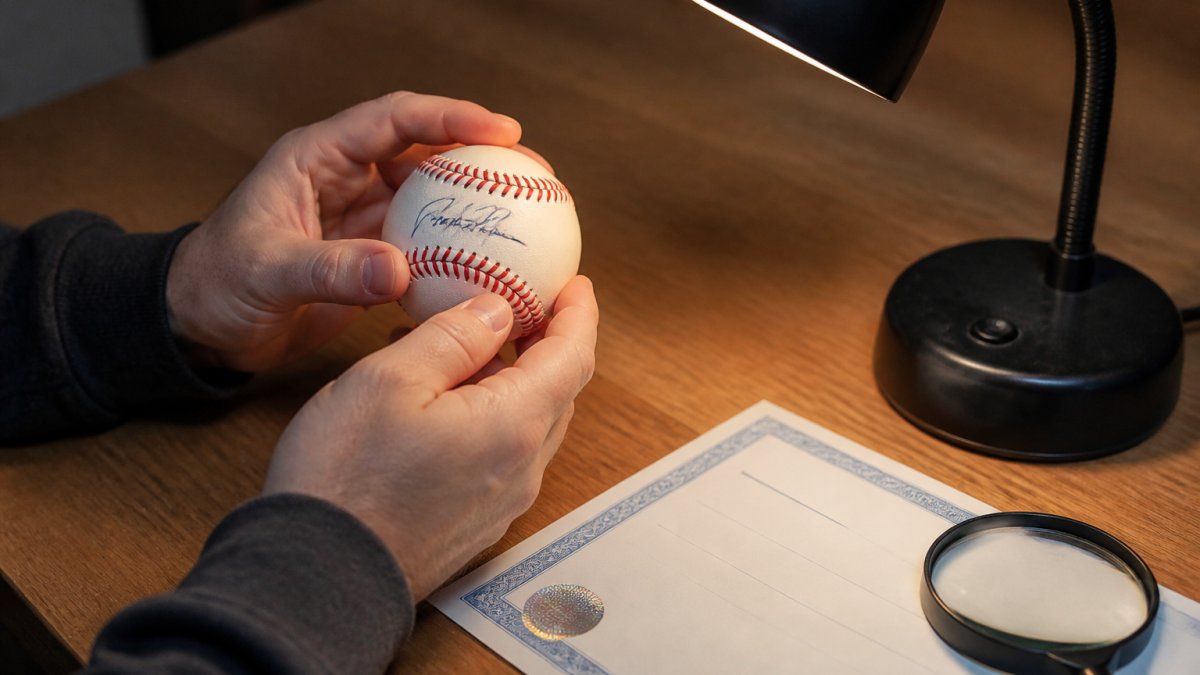
Here's a practical sequence to follow before you commit:
- Check the autograph against known examples. Compare flow, pressure, and letter shapes with verified samples from the same era.
- Read the certificate word for word. Confirm it names the item, athlete, and signing date or event.
- Match the serial or hologram number. A certificate referencing a number not on the item is a warning sign.
- Look for third-party authentication. Independent authenticators carry more weight than a seller's own letter.
- Ask for provenance history. Where did the item come from, and can the seller show it?
For guidance on how autograph authentication works in practice, the Universal Autograph Collectors Club authentication resources publishes consumer-facing information on the process.
Red Flags That Signal a Fake
A forged item usually gives itself away in the details. Watch for:
- A price far below comparable authenticated pieces
- A certificate with no serial number, photo, or authenticator name
- A signature that looks printed, traced, or too uniform
- A seller who can't answer basic provenance questions
- Stock photos instead of real images of the item
- Pressure to buy quickly
What a Sports Memorabilia Certificate of Authenticity Should Include
A sports memorabilia certificate of authenticity identifies a specific item, confirms what makes it authentic, and ties that confirmation to a traceable record. If it doesn't do all three, it's decoration.
A trustworthy certificate includes:
- The athlete's name and item description
- The signing date and location, when known
- A unique serial, hologram, or registration number
- The authenticator or issuing company's name
- A photo or description matching your exact item
- Contact information to verify the record independently
When a seller says an item comes with "authentic papers," ask to see them before you pay. Reputable sellers answer without hesitation.
Vintage Sports Jerseys: What Makes Them Different
Vintage sports jerseys carry different value than modern signed items: the appeal isn't just the autograph, but the era, manufacturer, and wear.
A 1957-style Hank Aaron Braves jersey in the Mitchell & Ness Cooperstown Authentic Collection tells a story a current-season replica can't. Hammerin' Hank hit 755 career home runs and held the all-time record for 33 years; owning a piece from that era is a different experience.
Anthony Munoz #78 Jersey Size 52 with Autographed Fleer Card →
What separates vintage from contemporary:
- Manufacturer and era accuracy. Authentic vintage reproductions follow original patterns, lettering, and materials.
- Pre-worn character. Genuine pre-worn jerseys show ballpark wear, not factory distressing.
- Player and moment significance. A Bo Jackson Royals throwback or Reggie Jackson Athletics jersey means more than a generic team shirt.
For collectors weighing Smithsonian guidance on preserving historic textiles, storage and handling matter as much as the purchase itself. Keep vintage jerseys out of direct sunlight and away from damp basements.

Buying Sports Collectibles Online: Risks and Safeguards
Shopping online opens up far more inventory than any local shop, but removes in-person inspection. That trade-off is manageable if you know what to protect against, and most guides stop at "buy from reputable sellers" without explaining marketplace and auction risk.
The biggest online risks are misrepresented condition, forged certificates, and sellers who disappear after the sale. Counterfeit autographs circulate widely on open marketplaces because there's no gatekeeper, and auctions add bidding pressure, buyer's premiums, and fast-closing return windows.
How to Verify an Autograph and Its Certificate Before You Pay
Verification is a sequence, not a single check. Work through it in order:
- Confirm the certificate names the exact item. The athlete, item type, and signing date or event should match the listing. A certificate describing a generic "signed photo" when you're buying a jersey isn't for your item.
- Match the serial or hologram number. The number on the certificate must appear on the item itself. If it doesn't, stop.
- Check the authenticator. Independent third-party authenticators carry more weight than a seller's own letter. Look up the name and confirm the serial in their database when available.
- Compare the signature to known examples. Look at flow, pressure, and letter shapes from the same era. A printed, traced, or too-uniform signature is a warning sign.
- Ask for provenance history. Where did the item come from, and can the seller show a chain of ownership or signing event record?
For guidance on how autograph authentication works in practice, the Universal Autograph Collectors Club authentication resources publishes consumer-facing information on the process.
Marketplace and Auction Risks Specific to Online Buying
- Counterfeit listings. Stock photos, prices far below market, and thin feedback histories are the common pattern.
- Bidding risk. Auction prices can climb past fair market value, and a buyer's premium is often added on top of the winning bid.
- Seller ratings. Read negative reviews first; patterns of "item not as described" matter more than an overall star rating.
- Dispute processes. Know the platform's claim window and required evidence, usually photos of the item, listing, and certificate.
- Return windows. Some sellers accept returns only for authenticity disputes, not changed minds or condition concerns.
Safeguards That Actually Work
- Buy from sellers who photograph the exact item, not stock images
- Confirm the return policy in writing before purchasing
- Pay through methods that offer buyer protection
- Request additional photos of signatures, tags, and certificates
- Verify the certificate's serial number with the issuer
- Keep the listing, messages, and payment records until the return window closes
Autographed Jerseys, Helmets, Balls, and Pucks: What to Expect
Each category of signed sports item has its own verification quirks. Knowing them helps you buy with confidence.
Autographed jerseys are the backbone of most collections. Pre-worn examples carry extra character, stitched lettering beats printed, and you should confirm the tag matches the listing.
Helmets range from mini to full-size.
Baseballs are the classic entry point; a Chipper Jones Braves autographed baseball is an accessible, display-ready example.

Pucks and other sport-specific items follow the same rules: verify the signature, the certificate, and the seller.
One honest note: not every autographed item in a catalog is authenticated. Our Anthony Munoz jersey and Fleer card listing states plainly that the signature has not been authenticated, and we price and describe it accordingly, transparency you should demand everywhere.
Frequently Asked Questions
How can you tell if sports memorabilia is authentic?
Check for a certificate of authenticity that names the signing date, location, and witness. Look up the serial number with the issuing company directly, not through a link the seller provides. Compare the autograph against known exemplars from the same era. Ask whether the item is game-worn, game-used, or simply autographed.
What should a certificate of authenticity include?
A trustworthy sports memorabilia certificate of authenticity lists the signer's full name, the item description, the date and location of signing, the name of the witness or authenticator, and a unique serial or hologram number. It should also include contact information for the issuing company so you can verify the record independently. If a COA has no serial number or cannot be verified by phone or online, treat it as decorative rather than proof.
Where can I buy authentic vintage sports jerseys?
Specialty shops that curate pre-worn and throwback jerseys are your best bet. Look for listings that name the manufacturer (Mitchell & Ness, Majestic, or similar), state the size and condition clearly, and describe the jersey's era. Jackson's Jerseys & Memorabilia, for example, carries pre-worn Cooperstown Collection pieces like a Hank Aaron #44 Braves jersey and a Bo Jackson #16 Royals jersey, each with detailed descriptions so you know exactly what you are getting.
What are the risks of buying signed sports memorabilia online?
The biggest risk is forged autographs paired with fake certificates. Marketplace sellers may also misrepresent game-worn items as game-used, or ship items that do not match the photos. Protect yourself by buying from sellers with clear return policies, verifying COA serial numbers independently, and paying with a method that offers buyer protection. If a deal looks far below market value, assume something is wrong until proven otherwise.
Do I need a big budget to start collecting authentic sports collectibles?
No. Signed baseballs and mini helmets from respected players often start around $40 to $50, and pre-worn jerseys can be found from $30 upward depending on the player and era.